
Waterfall vs Agile vs Hybrid: Choosing the Right Methodology in 2026
As we move into 2026, organizations are under increasing pressure to deliver projects faster, adapt to constant change in technology, and maintain strong governance and accountability. In this environment, selecting the right project management methodology is no longer a theoretical discussion. It is a strategic decision that directly impacts project delivery, team efficiency, stakeholder confidence, and long-term business outcomes.
Despite the recent rise of new tools and trends, three methodologies continue to dominate across industries worldwide: Waterfall, Agile, and Hybrid. Each serves a distinct purpose, and in reality, most organizations today use more than one approach at the same time to efficiently manage and deliver their projects.
The real challenge in 2026 is not deciding which methodology is best, but how to apply the right methodology to the right project without fragmenting teams, processes, or tools.
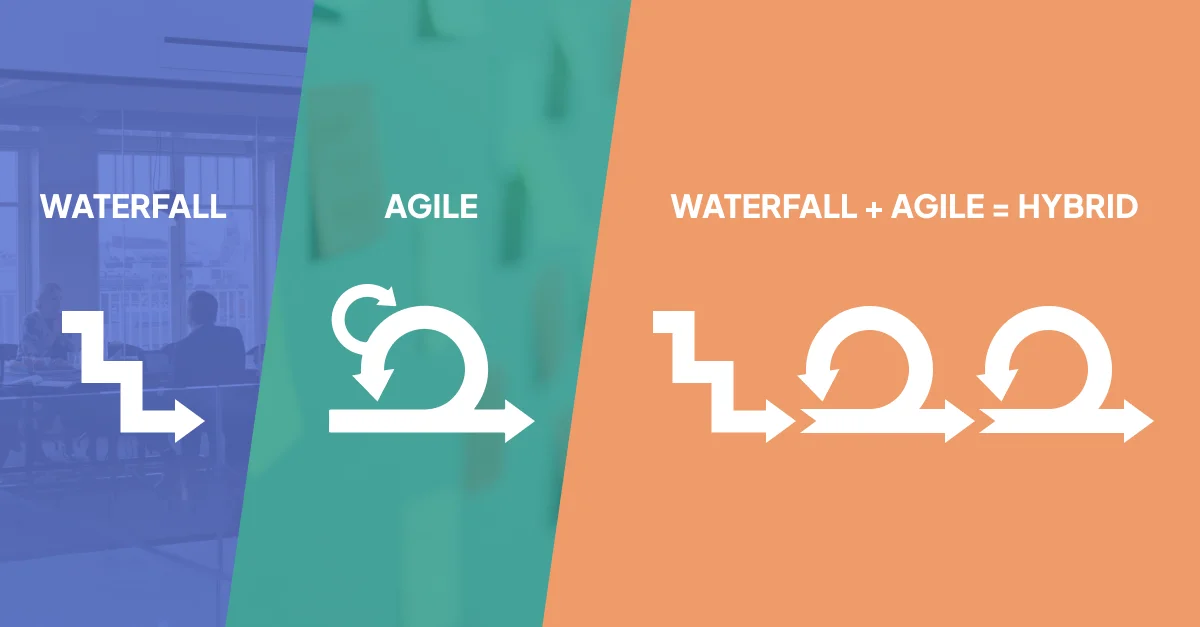
Understanding the Three Core Methodologies
1. Waterfall – Structured, Sequential, Predefined and Predictable
Waterfall follows a linear approach where projects move through clearly defined phases from requirements and planning to execution and final delivery. Each phase is completed before the next one starts, supported by formal documentation and approvals.
Best suited for
- Construction, engineering, and infrastructure projects
- Government and compliance driven initiatives
- Projects with fixed-scope and fixed-budget
Key limitations
- Changes are costly and require multiple approvals once execution has started
Feedback is received late in the project lifecycle - However, Waterfall remains highly relevant in 2026 for projects where scope, budget, and timelines are clearly defined, and where certainty and compliance are critical.
2. Agile – Iterative, Flexible, and Customer-Focused
Agile delivers work in short iterations, allowing teams to adapt quickly based on feedback and evolving requirements. It helps the manager focus more on collaboration, transparency, and continuous improvement.
Best suited for
- Software development and IT initiatives
- Software Product development and innovation teams
- Projects operating in fast-changing business environments driven by rapid technological change.
Key limitations
- Long-term cost and timeline predictability can be challenging
- Requires strong team collaboration, discipline and governance
Agile excels where early delivery, learning, and change adaptability matter more than rigid predictability.
3. Hybrid – The Practical Choice for Modern Organizations
The Hybrid methodology combines Waterfall’s upfront planning with Agile’s flexible execution, and in 2026 it has become the preferred model for many medium to large organizations.
Best suited for
- Digital transformation initiatives
- Enterprise-wide and cross-functional programs
- Organizations managing mixed project portfolios
Hybrid offers structure without rigidity and flexibility without chaos, making it ideal for today’s complex project environments.
Comparison Table: Waterfall vs Agile vs Hybrid:
Aspect |
Waterfall |
Agile |
Hybrid |
|---|---|---|---|
|
Flexibility |
Low |
High |
Medium High |
|
Predictability |
High |
Medium |
High |
|
Handling Change |
Costly |
Easy |
Controlled |
|
Delivery Model |
Single release |
Iterative |
Mixed |
|
Best For |
Infrastructure, Government |
Software, Innovation |
Cross-functional programs |
Which Methodology Should You Choose?
There is no universal answer, but there is a correct choice for each context.
- Choose Waterfall when governance, documentation, and predictability are mandatory
- Choose Agile when quick delivery, feedback, and adaptability are required for success
- Choose Hybrid when you are managing diverse teams, project types, or transformation initiatives
For many organizations in 2026, Hybrid is not a compromise, it is a strategic advantage.
Where QPunch Fits In
One of the biggest challenges organizations face today is not methodology selection but is finding a tool which helps you in managing multiple methodologies without switching platforms.
That’s why QPunch is designed to support Waterfall, Agile, and Hybrid projects within a single, unified system:
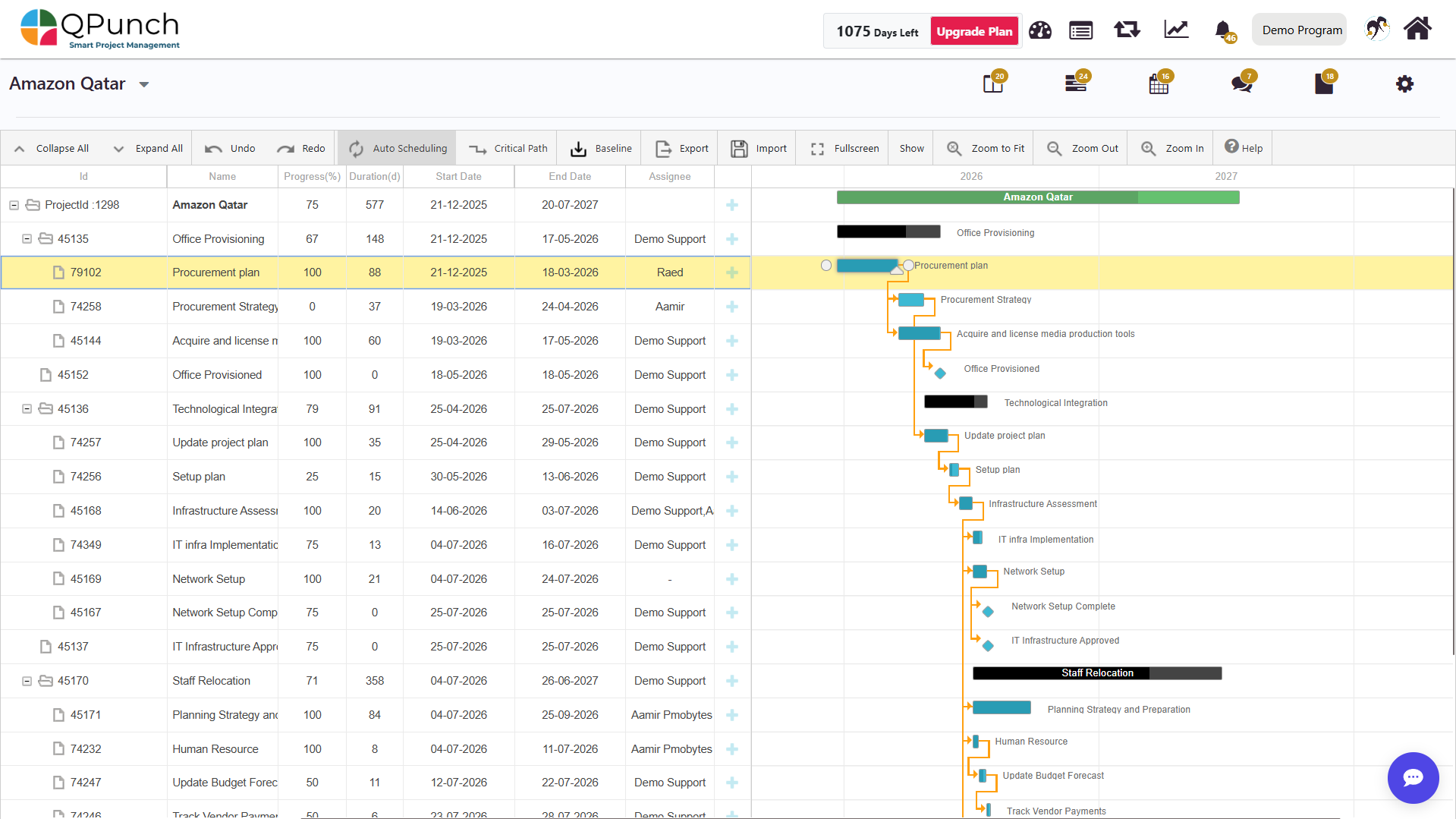
1. Waterfall: QPunch supports Waterfall projects by providing Gantt charts, milestones, dependencies, and reporting designed for governance and compliance, enabling teams to plan, execute, and monitor projects with clarity and control.
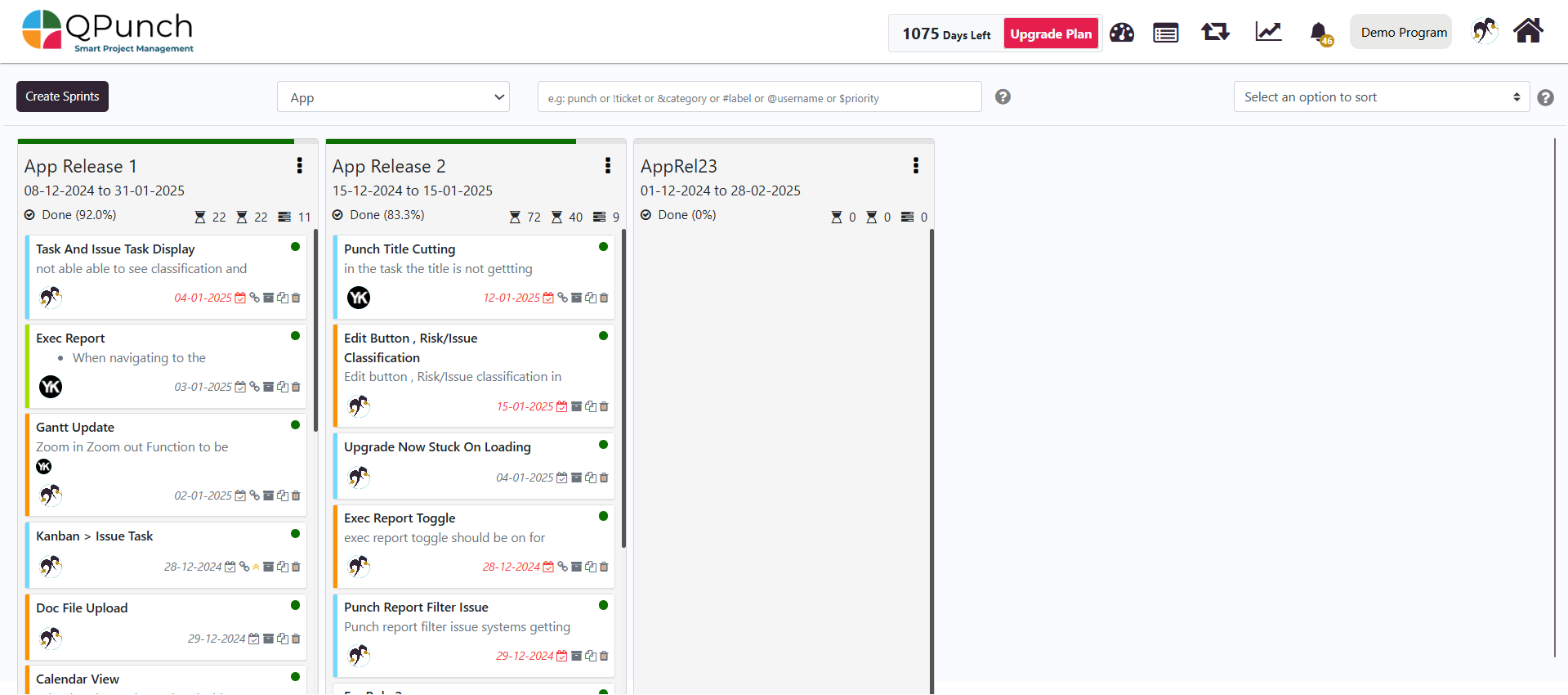
2. Agile: QPunch supports Agile delivery through Kanban boards, sprint execution, and real-time collaboration, enabling teams to adapt quickly and deliver incremental value.
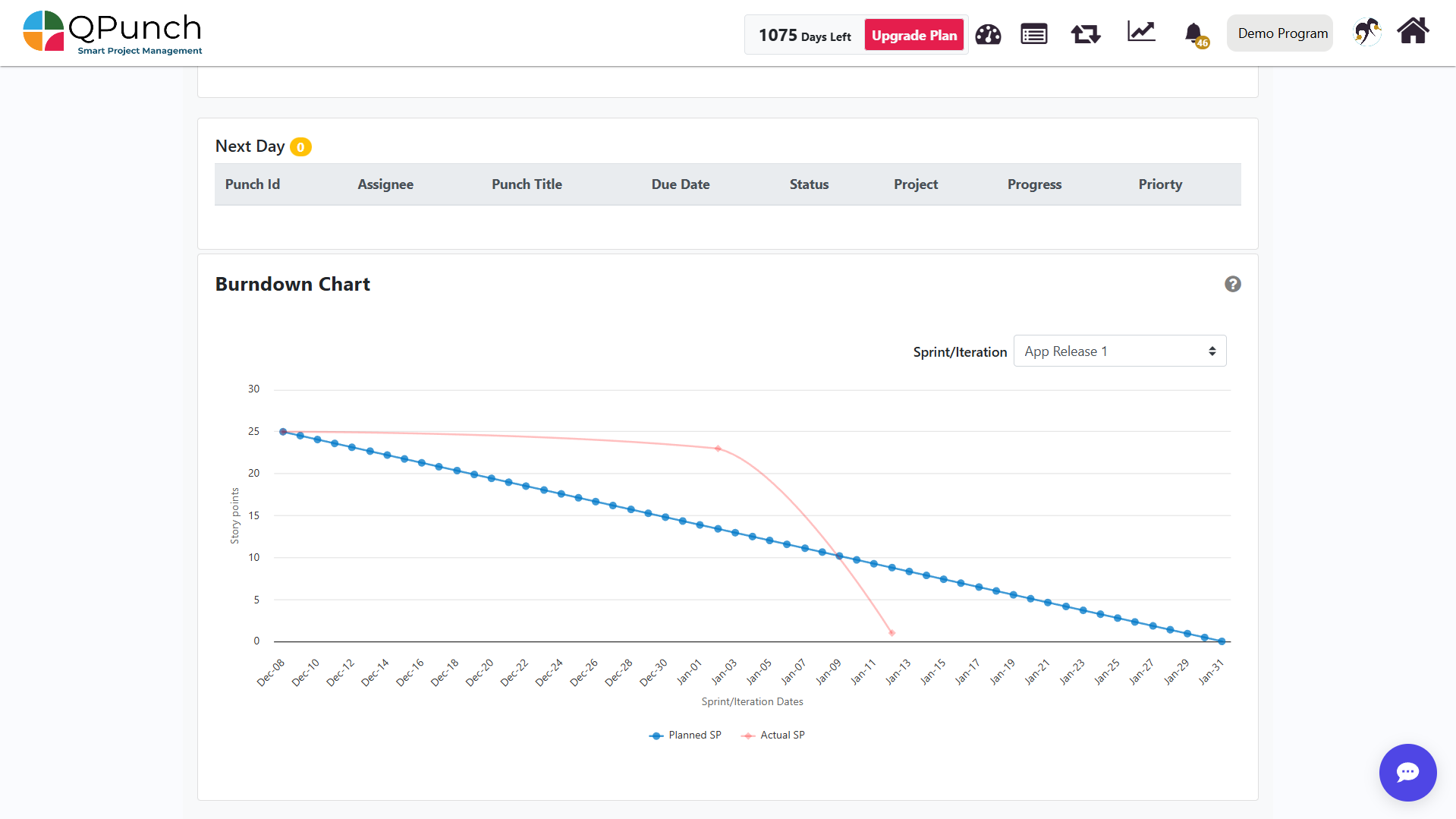
In Agile projects, work is estimated using story points to reflect effort and complexity which QPunch tracks through burndown charts, showing how story points are completed over time and helping teams monitor sprint health and risks early.
3. Hybrid: QPunch enables hybrid projects by combining structured planning with flexible execution in one platform. Teams can plan work using Gantt charts and Kanban boards, execute tasks through Agile boards, and monitor progress using real-time dashboards. This allows organizations to maintain clear timelines and governance while still adapting quickly to changes during delivery.
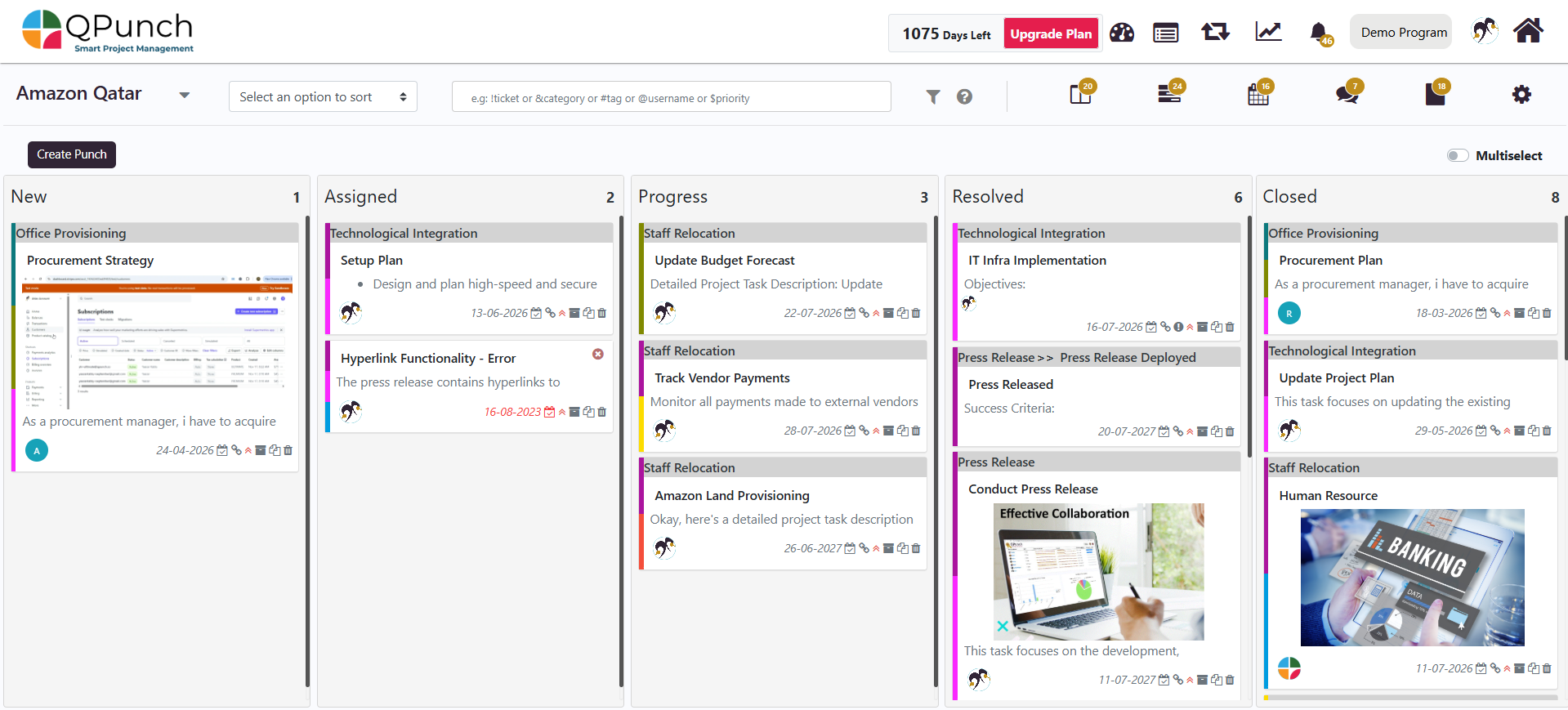
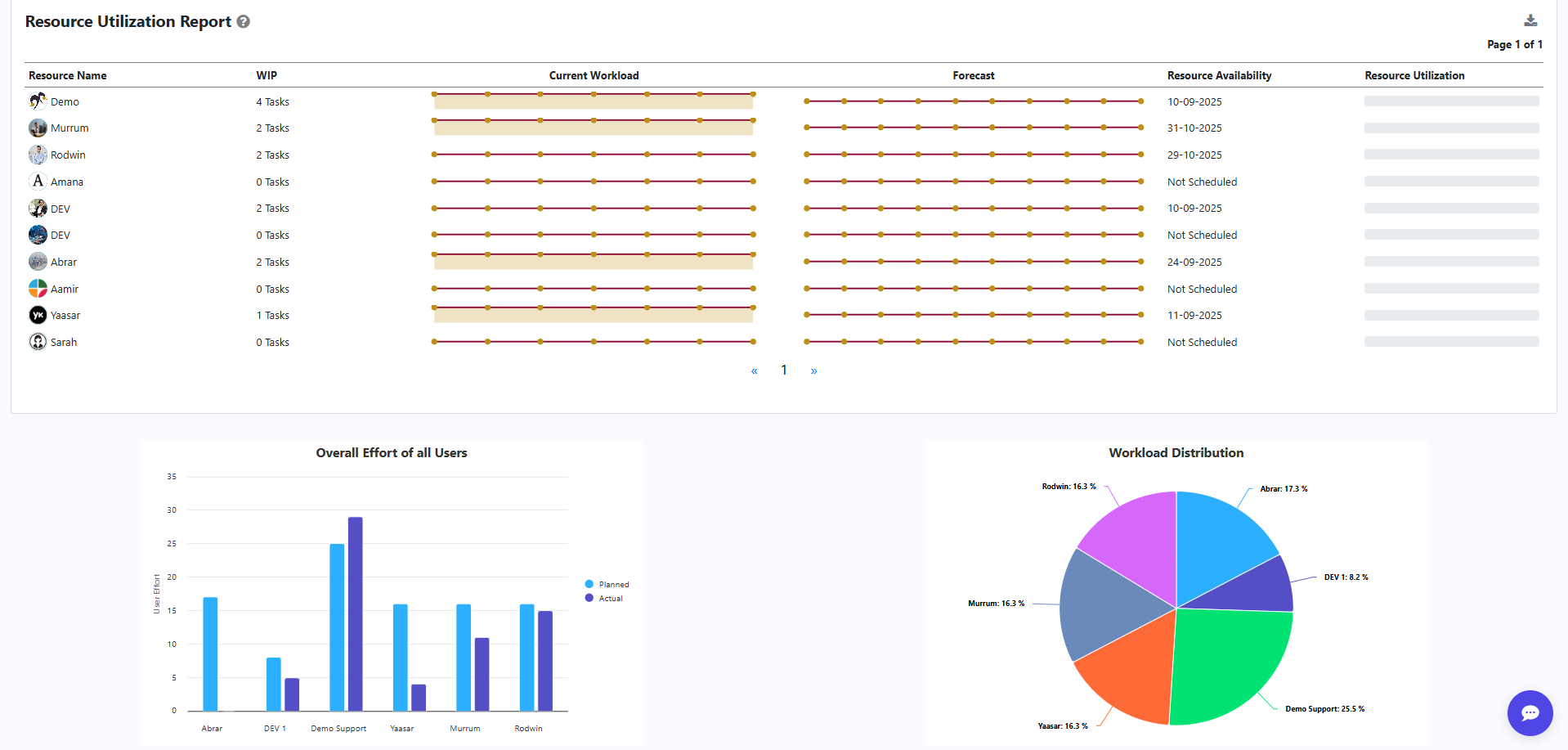
With multiple project views, resource utilization dashboards, and time tracking, QPunch enables organizations to maintain visibility, control, and flexibility, regardless of the methodology used.
Final Thoughts
The future of project management is not about choosing one methodology over another, but about enabling the right approach for the right project without sacrificing business value or creating operational friction. Waterfall provides structure and certainty, Agile delivers speed and adaptability, and Hybrid bridges strategic planning with flexible execution. With QPunch, organizations can confidently run Waterfall, Agile, and Hybrid projects side by side, ensuring consistent governance, stronger collaboration, and aligned delivery across the entire project portfolio. Looking ahead to 2026 and beyond, success will belong to organizations that are methodology-agnostic, outcome-focused, and enabled by a unified platform.
Address On Maps
Ready To Get Started with Smart Project Management?